
Transition From Founder-Led Sales to an Autonomous Revenue Engine.
I help B2B business owners automate revenue processes, scale profitability, and maximize enterprise valuation—so your business runs predictably without you.
Thirty minutes, no deck, no pitch. You leave with a read on your valuation position either way.
Exit readiness snapshot
5.1×→6.5×
The EBITDA multiple the calculator below returns for a $6.5M business where the owner still runs 65% of sales — a $1.23M swing in enterprise value, before a dollar of new revenue.
$2M – $20M
Sweet spot company stage
Engagements run to $50M
3× – 5×
Valuation multiple growth focus
Measured on EBITDA
100% Autonomy
Removing founder bottlenecks
Sales off the owner
Exit-Ready
Positioned for maximum payout
12 – 36 month window
Why Most B2B Companies Hit a Ceiling at $2M–$20M
Four findings show up in almost every company in this band. None of them are performance problems — which is precisely why working harder has stopped fixing them.
The Founder Bottleneck
Revenue stops growing the moment the owner steps away from daily sales execution. Every deal of consequence routes through your relationships, your pricing instinct, your follow-up — so the pipeline is not a system, it is your calendar.
Cost: Growth capped at one person's bandwidth
The Valuation Penalty
Acquisition buyers discount heavily for businesses that rely on the owner's personal relationships. Two companies with identical earnings sell for very different numbers, and the gap is not performance — it is transferability.
Cost: A multiple that prices you, not the business
Fragmented Systems
Revenue generation relies on manual effort rather than automated, scalable process. Leads sit in four places, the forecast is a feeling, and nobody can say what happens between a first call and a signature.
Cost: Effort rising faster than revenue
Burnout Over Joy
The business consumes the founder's life instead of supporting their purpose and freedom. Weekends are for catching up, the phone never stops, and the thing built to create choices has quietly started removing them.
Cost: A trap where a pathway used to be
How We Scale Your Revenue, Profitability & Valuation
Four pillars, run in sequence, because autonomy without a working engine is a slower version of the same problem — and no buyer pays a premium for either one on its own.
Automated Revenue Systems
Predictable pipeline
Modern sales automation, pipeline rigour and AI assembled into one engine: demand generation that runs to a cadence, a CRM that reflects reality, and a forecast you can take to a board without apologising for it.
What you end up with
- Documented demand and pipeline model
- AI-assisted qualification and follow-up
- A forecast that survives scrutiny
Operational Autonomy
The company runs without the CEO
Team playbooks, revenue leadership and an operating cadence structured so performance does not depend on you being in the room. Relationship-held revenue gets documented, reassigned and proven under someone else's name.
What you end up with
- Revenue org design and comp structure
- Weekly operating cadence and scorecard
- Accounts transitioned off the founder
Valuation Optimization
A multiple that reflects the machine
EBITDA health, governance and recurring revenue improved on purpose rather than by accident — so the business commands a top-dollar exit multiple instead of explaining itself through diligence.
What you end up with
- Readiness diagnostic and valuation thesis
- Contract, pricing and concentration work
- Data room and diligence preparation
Founder Joy & Purpose
A business that serves the life
The commercial outcome aligned to your personal life strategy and financial freedom: what the money is actually for, what you want a week to look like, and which version of the exit you are optimising toward.
What you end up with
- Clarity on the number that ends the chapter
- A post-transaction role you actually want
- Time back while the engine keeps running
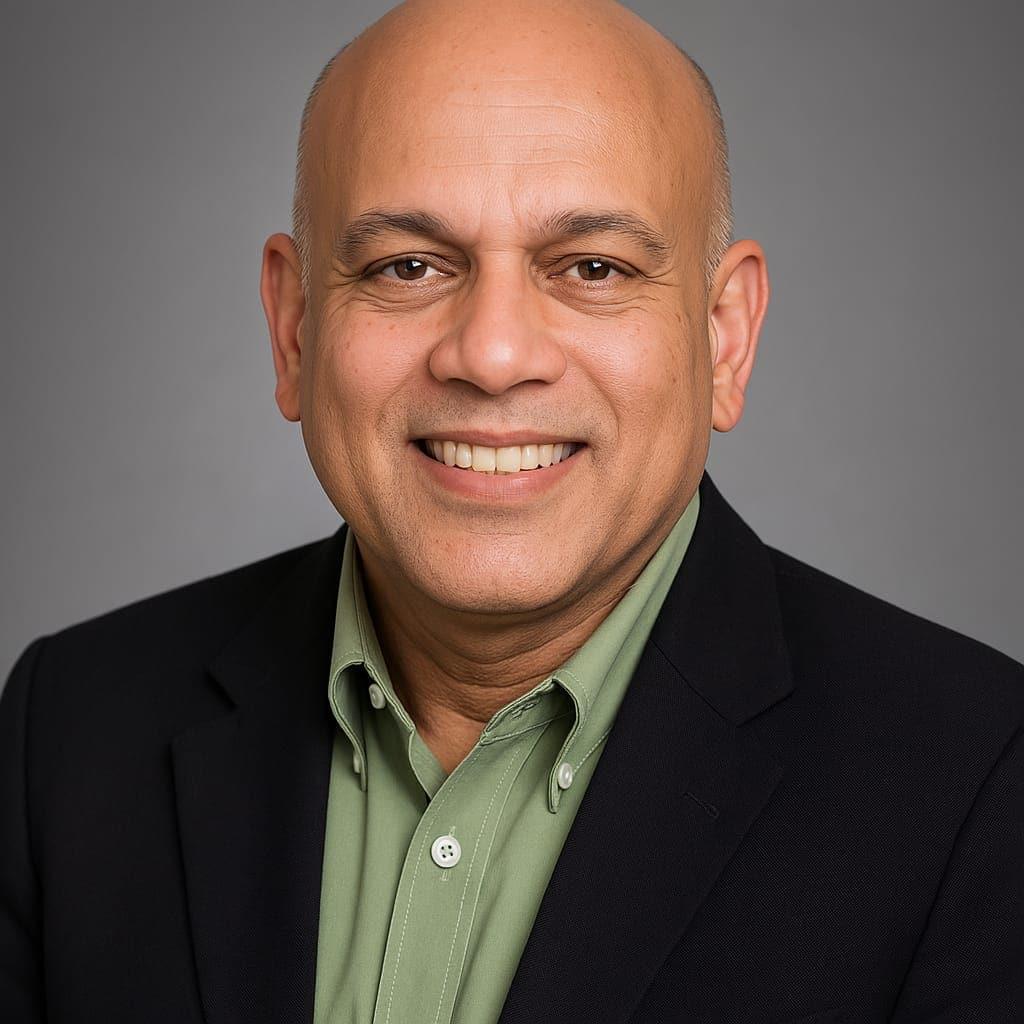
Fractional CRO, go-to-market strategist, founder advisor.
Paul sits in the operating seat rather than beside it — owning the forecast, the pipeline discipline and the sales organisation for a defined window, then handing back something that runs without him and without you.
The through-line across three decades of go-to-market work is the same: revenue is a system, not a personality. Build the system and the founder gets a choice back — keep running it, hand it over, or sell it at a number that reflects what was actually built.
“Business should support the purpose of your heart and bring you joy.”
That is not a softer version of the commercial work — it is the point of it. See the 90-day accelerator for the structured version of the same discipline.
Is This You?
Four conditions decide whether this work compounds or stalls. Meet all four and the engagement pays for itself inside the term.
Not a fit when
- Pre-revenue or first-customer stage
- Looking for a commission-only salesperson
- Wants leads bought rather than a system built
B2B company generating $2M – $20M, with capacity up to $50M.
Founder planning an exit within 12 – 36 months, or stepping into a Chairman role.
Ready to replace manual sales effort with automated, repeatable systems.
Committed to building enterprise value while honouring personal life purpose.
What Would a Buyer Discount You For Today?
The same five dimensions diligence tests, scored in about a minute. It converts readiness into an EBITDA multiple and shows the dollar gap between what the business is worth now and what it is worth transferable.
Eight inputs, recalculated as you move them. Nothing is sent anywhere until you ask for the written report — move the sliders honestly and read what a buyer would read.
Every point here is priced as key-man risk in diligence.
Contracted revenue is the cheapest multiple expansion available.
Above 30% a buyer holds money back against that renewal.
The earnings the multiple actually applies to.
50of 100
Transferable — the engine runs, the discount is structural
Valuation gap
$1.23M
Recoverable at your current revenue and margin. This is the founder-dependency discount, not a growth forecast.
- On $6.50M of revenue at a 14% margin, This business earns about $910K of EBITDA. At today's readiness a buyer prices that near 5.1× — roughly $4.67M.
- The same earnings, transferred cleanly, support about 6.5× — $5.90M. The $1.23M between those two numbers is not growth. It is the discount for founder dependency, and it is recoverable without selling a single extra dollar.
- At 65% owner involvement the team can sell, but not without you in the room for the deals that matter. Buyers read that as key-man risk and hold back consideration in an earn-out.
- A twelve to thirty-six month window is the sweet spot — long enough to rebuild the revenue engine and show a buyer two clean trading periods on the new numbers.
- Founder independence12/30
65% of deals still run through you
- Revenue predictability10/22
35% contracted or recurring
- Customer diversification13/18
largest client is 22% of revenue
- Systems & documentation8/18
some process, inconsistently followed
- Margin quality7/12
14% EBITDA margin
Next best action
Book the Exit & Revenue Discovery Session — the engine works, and the remaining gap is structural: concentration, contracts and documentation.
Get this as a written read: the three findings that cost you the most multiple, and the order Paul would fix them in.
Multiples are directional benchmarks by revenue scale and readiness, not an appraisal or an offer. A real valuation depends on your market, your accounts and the buyer across the table.
Build a Business That Operates Without You—And Commands Maximum Value.
Let’s analyze your revenue engine, automation opportunities, and valuation upside in a 30-minute discovery call.
- 01
The discovery call
Thirty minutes on your revenue engine, your automation gaps and your valuation position. You leave with a read whether or not we work together.
- 02
The diagnostic
If there is a fit, a two-week teardown of pipeline, pricing, concentration and process — scored the way an acquirer would score it.
- 03
The engagement
Fractional CRO leadership in the operating seat, typically two to four days a month across a six to twelve month term.
Book your session
Requests are read personally. Bring the revenue number, the constraint, and the outcome you need.